The right response to scratches, dullness, cracks or opening seams depends on the actual material, finish and cause of damage. Photos and known product details can support an initial discussion; the feasible scope is confirmed after product and site conditions are reviewed.
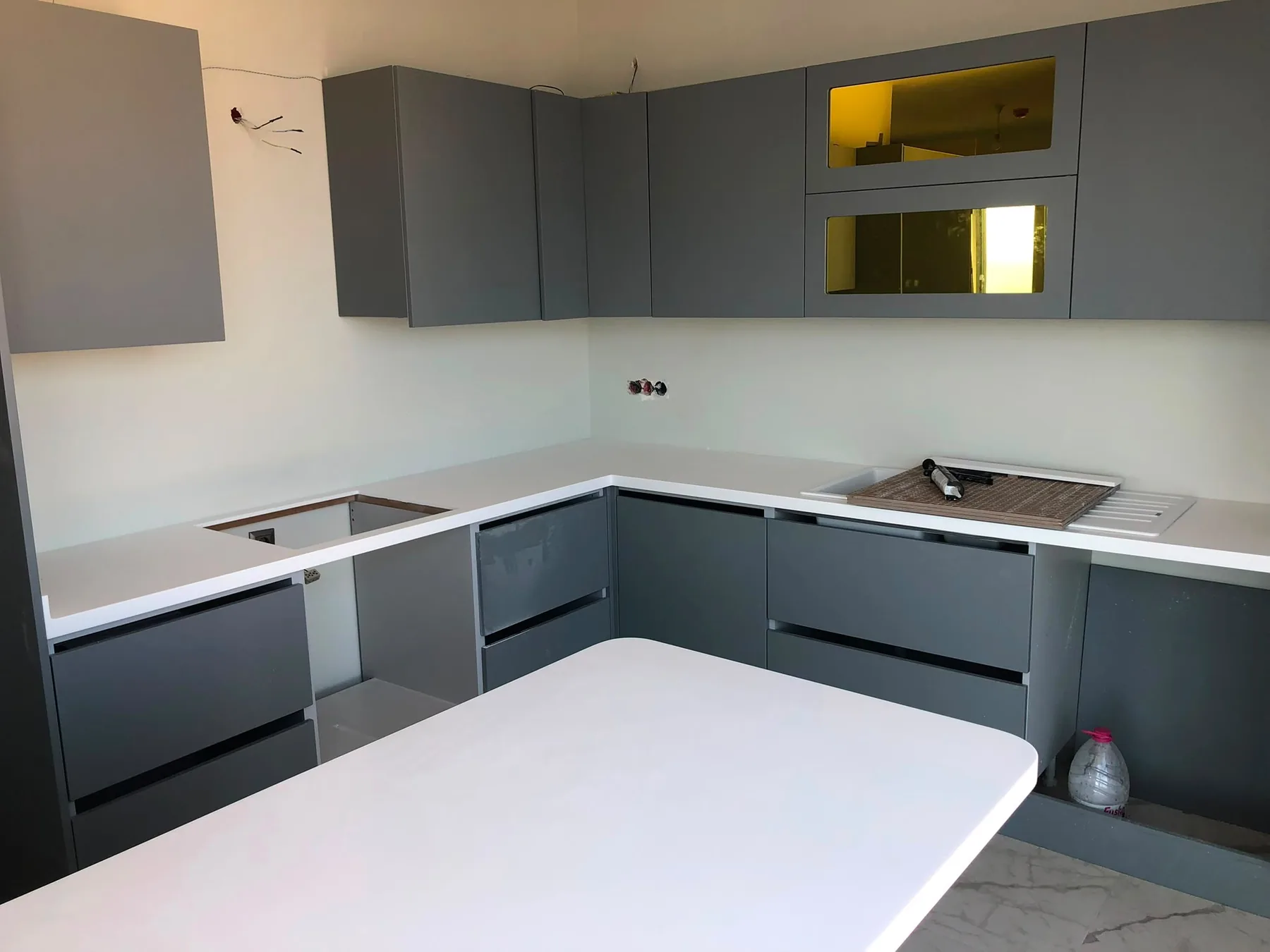
A general surface example from HMM’s kitchen archive; this photograph is not a repair record.
01
Identify the material and the damage first
Acrylic solid surface, engineered quartz and laminate are not repaired using the same methods. Product/brand details, approximate age, damage location and close-up photos help with an initial assessment. If a crack is accompanied by swelling, leakage or movement in the supporting structure, treating only the visible surface may not address the underlying cause.
02
Scratches, dullness and surface refinishing
Some homogeneous acrylic solid surface products may allow professional refinishing for light surface scratches or uneven sheen, following the product’s technical instructions. Results depend on colour, texture, finish, damage depth and previous work. Not every acrylic-look surface can be sanded, so the product must be identified first.
03
Cracks, seams and sink junctions
A crack, opening seam, chipped edge or issue around a sink should be assessed together with its cause. Impact, substrate movement, moisture or installation conditions can make a surface-only treatment short-lived. Where appropriate, local repair, seam work or broader renewal options can be compared by scope and cost.
04
Everyday care and what to avoid
Follow the care guide for the exact product first. For routine cleaning, use a soft cloth and cleaner permitted by its instructions; use a trivet under hot cookware and a cutting board for food preparation. Do not use solvents, strong chemicals, abrasive pads or household sanding methods without checking the product guidance; warranty terms may be affected.
05
Repair, refinishing or replacement?
The decision depends on damage depth, underlying support, surface age, previous work and access to the affected area. A limited treatment may be suitable for some surfaces; broader refinishing or replacement may need to be considered in other cases. A specific result or durability cannot be promised before the material and damage are assessed.
06
Initial review and quotation process
For an initial discussion, share an overall countertop photo, a close-up of the damage, sink/wall junctions, approximate dimensions, district and the product/brand name if known. A photo review is preliminary. If needed, a site assessment is arranged; the feasible scope, timing and price are confirmed separately before any work begins.
From the HMM project archive
Kitchen surface examples
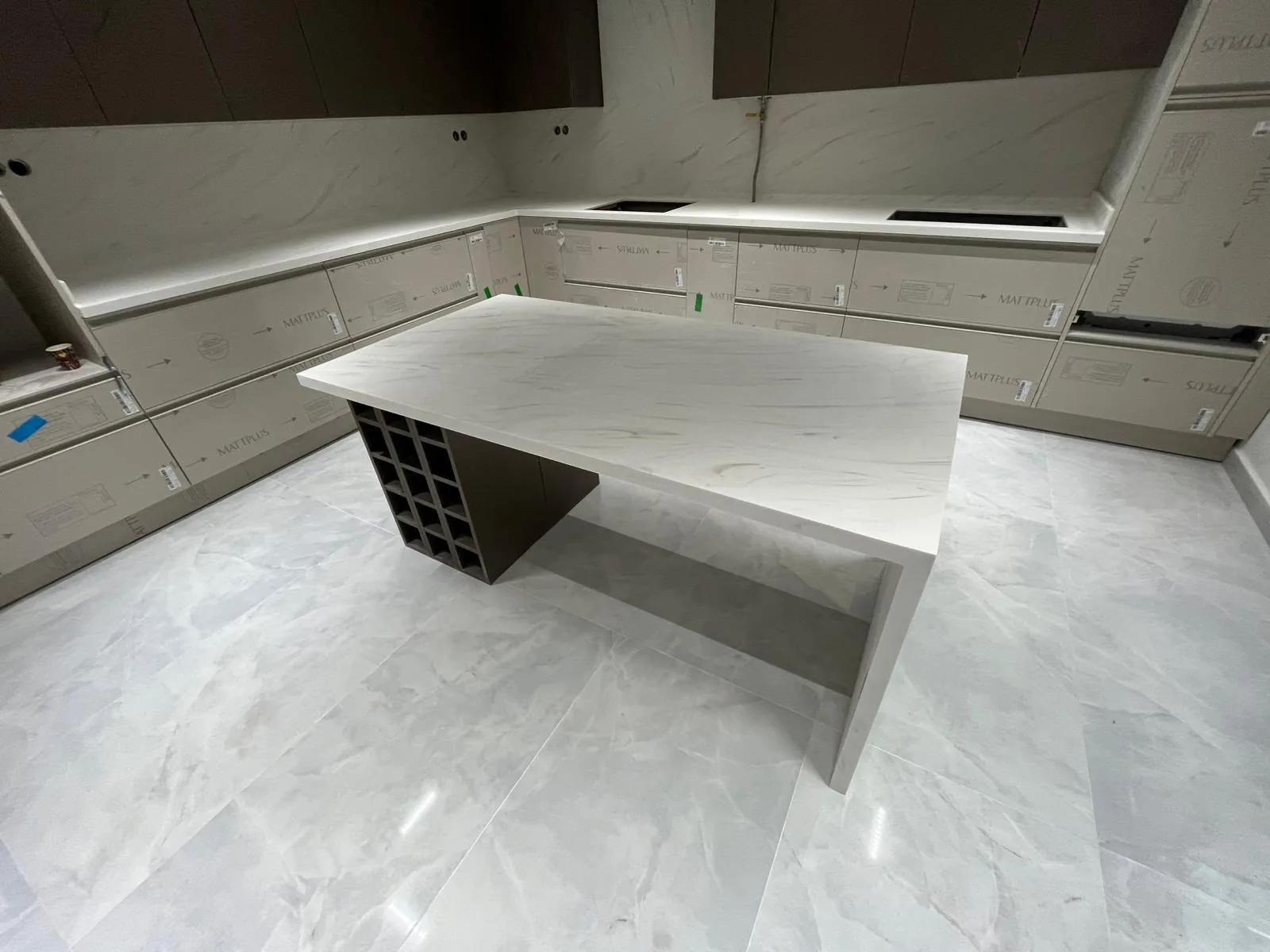
These are real portfolio photographs, not repair before-and-after evidence. The condition and repairability of each countertop must be assessed individually.
A general surface example from the archive; this is not a before-and-after repair record.An example from the real kitchen-surface archive; it is not presented as damage repair work.
Selecting a surface? Compare product documentation, care conditions and written warranty terms rather than assuming they are identical across brands.
Can every crack or scratch in an acrylic countertop be repaired?
No. Material type, damage depth, underlying support and previous repairs all affect feasibility. The product and damage should be assessed first; renewal or replacement can be discussed where repair is unsuitable.
Can I sand and refinish the countertop myself?
Do not sand or use abrasive pads without instructions for the exact product and finish. This can create colour or sheen differences, worsen the damage or affect written warranty terms.
How is a maintenance or repair quote determined?
The material, size and location of the affected area, removal requirements, sink/wall junctions and labour scope need to be assessed. A fixed price or repair guarantee cannot be confirmed before the condition is reviewed.
What should I send for an initial assessment?
If available, send an overall countertop photo, close-ups of the damage and sink/edge junctions, approximate dimensions, district/location and the product or brand details. Photos support an initial review; final scope is confirmed separately.
Can quartz or laminate receive the same treatment?
No. Acrylic solid surface, engineered quartz and laminate are different product families. Do not assume the same care or repair method applies before identifying the surface and checking its manufacturer guidance; share product details if known.
Will photos confirm a final price and appointment date?
Photos help with an initial review but do not establish the final scope or price on their own. The material, cause of damage, dimensions and site conditions must be checked before the feasible work and timing can be confirmed.